


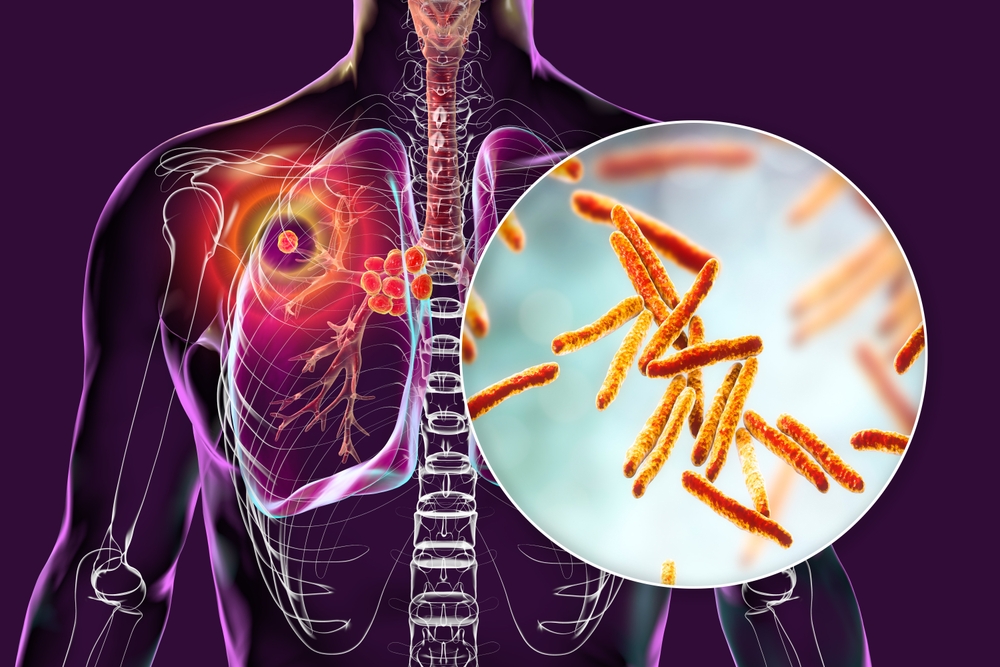
Drug-resistant tuberculosis (DR-TB) remains one of the most serious global challenges in infectious disease control and a major barrier to achieving the World Health Organization (WHO) End TB Strategy goals. Despite progress in tuberculosis (TB) diagnosis and treatment after the COVID-19 pandemic, DR-TB continues to cause high levels of illness, death, and long-term disability. In 2023, there were around 400,000 new cases of multidrug-resistant or rifampicin-resistant TB (MDR/RR-TB) and about 150,000 deaths worldwide. The greatest impact is seen in South-East Asia and sub-Saharan Africa, where human immunodeficiency virus (HIV) co-infection and limited healthcare resources worsen outcomes.
Resistance to rifampicin and isoniazid—the two key drugs in standard TB treatment—defines the most common form of DR-TB. More advanced types, such as pre-extensively drug-resistant TB (pre-XDR-TB) and extensively drug-resistant TB (XDR-TB), show additional resistance to fluoroquinolones and newer drugs like bedaquiline or linezolid. Up to 60% of DR-TB cases are caused by direct transmission of already resistant strains, rather than by resistance developing during treatment. Most infections are spread between humans, but transmission between humans and animals (in both directions) has been reported, especially with Mycobacterium bovis and related species. This highlights the need for a One Health approach, linking human, animal, and environmental health efforts.
There are still major gaps in prevention, detection, and treatment. Preventing DR-TB involves rapid diagnosis, responsible antibiotic use, strong infection control, and preventive treatment for close contacts. Preventive use of fluoroquinolones and new vaccine candidates such as M72/AS01E are promising strategies. However, only about 63% of pulmonary TB cases are bacteriologically confirmed, and less than half of MDR/RR-TB cases receive full testing for resistance to second-line drugs. New molecular tools—such as Xpert MTB/XDR and targeted next-generation sequencing (tNGS)—allow faster and more detailed resistance testing, but their availability remains limited in high-burden countries.
Treatment outcomes for DR-TB are still worse than for drug-susceptible TB, with a global success rate of about 68%. Recently introduced all-oral treatment regimens lasting 6–9 months—based on combinations of bedaquiline, linezolid, pretomanid, and fluoroquinolones—have improved safety and effectiveness, though resistance to these drugs is already appearing. Several new antibiotics, such as quabodepistat and BTZ-043, are in advanced clinical trials and may help overcome resistance. Other innovative approaches include therapeutic drug monitoring (TDM) to adjust doses, pharmacogenomics to personalize therapy, and experimental treatments like bacteriophage (phage) therapy, nanomedicine (drug delivery using nanoparticles), and immunotherapies such as chimeric antigen receptor (CAR) T-cell therapy and cytokine-based treatments.
To control DR-TB effectively, health systems must be strengthened. Poverty, undernutrition, and poor access to care remain key drivers of poor outcomes. Implementation research and person-centered care are essential to close gaps in diagnosis and treatment, improve adherence, and reduce stigma. A One Health framework—which connects human, animal, and environmental health—can also help prevent transmission and reduce antibiotic misuse in agriculture.
Ultimately, ending DR-TB will require a comprehensive and equitable approach: rapid and accurate diagnostics, effective and personalized treatments, preventive measures, social support, and long-term investment in research. Despite progress, global funding for TB prevention and care covers less than 20% of what is needed. Without greater innovation and political commitment, the goal of ending TB by 2035 will remain out of reach.
Reference
Yapa HM, MacLean EL, Menzies NA, Dodd PJ, Dean A, Mirzayev F, Schumacher SG, Nguyen LN, Zignol M, Fox GJ.0.Drug-resistant tuberculosis: a priority pathogen for enhanced public health research and practice. Clin Microbiol Rev 0:e00064-25.https://doi.org/10.1128/cmr.00064-25